
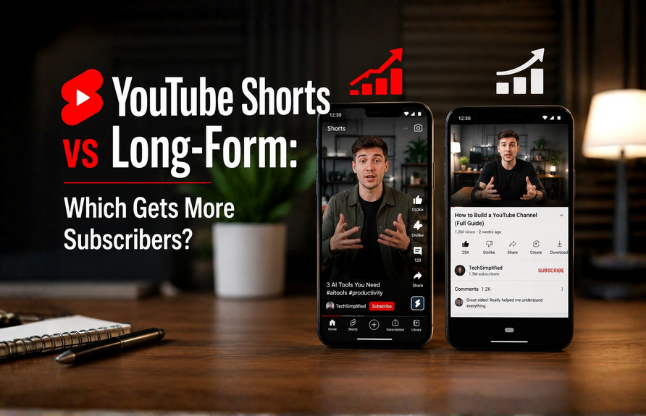
YouTube Shorts vs Long-Form: Which Gets More Subscribers?
YouTube has changed a lot over the last few years. Earlier, creators mainly focused on uploading long videos, improving thumbnails, and increasing watch time to grow their channels. But after the launch of Shorts, the platform started evolving much faster. Now creators can gain thousands of views from a 20-second video, something that was much harder to achieve with traditional uploads alone.
Because of this shift, many creators are confused about where they should invest their time. Some people believe Shorts are the fastest way to grow, while others still trust long-form videos for building loyal audiences. The truth is that both formats work differently, and each one has its own strengths.
If your goal is fast reach, Shorts can help massively. If your goal is building a strong community and long-term engagement, long-form content still plays a huge role. This is why understanding the difference between both formats is important for anyone serious about YouTube subscriber growth.
In this blog, we’ll break down how Shorts and long-form videos actually perform, which format gets more subscribers, and how creators can combine both into a smarter YouTube growth strategy.
Why YouTube Shorts Became So Popular
When YouTube introduced Shorts, many people saw it as a response to TikTok and Instagram Reels. Short-form content was already dominating social media, and YouTube needed a way to keep users engaged on its own platform. What started as an experiment quickly became one of the biggest traffic drivers for creators worldwide.
The biggest advantage of Shorts is discoverability. YouTube pushes Shorts aggressively into feeds, even from channels with very few subscribers. A creator with zero audience can suddenly receive thousands or even millions of views if the content performs well. That kind of exposure is difficult to achieve with regular long-form uploads.
Shorts are also easy for viewers to consume. Most people today scroll quickly through content and prefer instant entertainment or fast information. A short video requires very little commitment, which is why users keep swiping and watching more. This behavior gives creators more opportunities to reach new audiences rapidly.
For beginners, this can feel exciting because growth appears much faster. A single Short can outperform weeks of regular uploads in terms of views and reach. That’s one reason many creators, influencers, and brands involved in Social Media Marketing now include Shorts in their overall content strategy.
However, fast views do not always translate into loyal subscribers.
How Long-Form Videos Build Stronger Audiences
While Shorts are great for visibility, long-form videos are usually better at building trust and connection. When viewers spend 10 or 15 minutes watching a creator, they understand the personality, value, and style behind the content. This creates a deeper relationship compared to watching a quick clip for a few seconds.
Long-form content gives creators enough time to explain topics properly, tell stories, teach skills, or entertain audiences in a more meaningful way. Because of this, viewers who subscribe after watching long-form videos are often more loyal and engaged.
These subscribers are more likely to:
- Watch future uploads
- Return regularly to the channel
- Leave comments and feedback
- Share videos with others
- Become part of the creator’s community
Long-form videos also perform better in YouTube search results. Many people actively search for tutorials, reviews, guides, and educational content. These viewers already have intent, which means they are more likely to subscribe because they genuinely want more similar content.
For example, someone casually scrolling through Shorts may subscribe impulsively after watching one funny clip. But someone who watches a detailed 15-minute guide usually subscribes because they trust the creator and find the content valuable.
That difference matters a lot for long-term channel growth.
Do Shorts Really Bring More Subscribers?
In terms of speed, yes — Shorts can bring subscribers much faster than long-form videos.
A viral Short can generate thousands of subscribers within days because YouTube’s algorithm pushes successful short videos to massive audiences very quickly. This is especially helpful for new creators trying to gain initial visibility.
Many creators experience subscriber spikes after posting Shorts consistently. Since viewers consume Shorts rapidly, even a small percentage of people subscribing can lead to significant growth numbers.
But there is another side to this.
Subscribers gained through Shorts are not always highly engaged. Sometimes viewers subscribe because they enjoyed one specific clip, but they never return to watch longer videos. This creates a situation where channels have large subscriber counts but low engagement on regular uploads.
That’s why many creators today struggle with something unusual:
- High subscriber count
- Millions of Shorts views
- Very low long-form watch time
This happens because Shorts audiences and long-form audiences often behave differently.
So while Shorts can absolutely increase subscriber numbers quickly, the quality of those subscribers may vary depending on your content strategy.
Why Long-Form Subscribers Are Usually More Valuable
Subscribers gained from long-form videos are often more loyal because they spend more time with the creator before subscribing. These viewers intentionally choose to invest their attention into the content instead of casually scrolling through it.
That usually leads to stronger engagement and better retention over time.
Channels built around long-form content often experience:
- Better audience loyalty
- Higher watch time
- More meaningful interactions
- Stronger monetization potential
- Better brand opportunities
For creators who want to build sustainable careers on YouTube, this matters more than vanity metrics alone.
A channel with 20,000 active subscribers who consistently watch videos can outperform a channel with 200,000 inactive subscribers gained through viral Shorts. This is something many new creators realize only after chasing quick growth for several months.
Long-form videos also create better opportunities for sponsorships, affiliate marketing, product promotion, and community building. Brands usually value engaged audiences more than random viral traffic.
That is why experienced creators still prioritize long-form content even though Shorts dominate discoverability.
The Smartest YouTube Growth Strategy Today
The best strategy in 2026 is not choosing one format over the other. The smartest creators combine both.
Shorts work as a discovery tool. Long-form videos work as a relationship-building tool.
Think of Shorts as the content that introduces people to your channel. Once viewers become interested, they move toward your longer videos where they spend more time engaging with your content.
This strategy works extremely well because both formats support each other.
For example:
- A Short grabs attention quickly
- The viewer checks your profile
- They discover your long-form videos
- They subscribe for deeper content
Many successful YouTubers now repurpose their long-form videos into multiple Shorts clips. They take the most interesting moments from a full video and turn them into short engaging content pieces. This helps them increase reach without constantly creating brand-new ideas from scratch.
This method is now widely used across Social Media Marketing campaigns and modern SMM Services because it maximizes content visibility while maintaining audience engagement.
How Often Should You Post Shorts and Long Videos?
Consistency matters more than uploading huge amounts of content.
A balanced content schedule could look something like this:
- 1–2 long-form videos weekly
- 4–7 Shorts per week
This allows creators to stay active while targeting both discoverability and audience retention.
Shorts can bring regular daily traffic, while long-form videos help convert viewers into loyal subscribers. Together, they create a stronger content ecosystem for your channel.
One mistake many creators make is relying only on Shorts because they are easier and faster to produce. While that may work temporarily, channels often struggle later with monetization and deeper audience connection.
Long-form content still generates better revenue opportunities through:
- Ad revenue
- Sponsorships
- Affiliate sales
- Memberships
- Courses and digital products
So even if Shorts help channels grow quickly, long-form videos usually create stronger business value over time.
Can Shorts Hurt Long-Form Performance?
This is one of the most debated topics among YouTube creators.
Some people believe Shorts reduce attention spans and hurt long-form performance. Others think Shorts simply attract different audiences. The truth is somewhere in the middle.
Shorts themselves are not harmful. Problems happen when creators upload unrelated content just to chase viral views.
For example, if a creator posts random meme Shorts but uploads serious educational long-form videos, the audience mismatch can confuse the algorithm and reduce engagement on longer uploads.
But if both formats support each other, the strategy works very well.
A creator teaching YouTube growth tips could:
- Post quick Shorts with fast tips
- Upload detailed tutorials as long-form content
This keeps the audience aligned and improves overall channel performance.
That’s why successful creators focus less on “viral content” and more on content consistency and relevance.
What Type of Content Works Best for Shorts?
Shorts perform best when they grab attention immediately. Since viewers can swipe away instantly, the first few seconds matter heavily.
Good Shorts usually include:
- Fast pacing
- Strong hooks
- Quick value delivery
- Emotion or curiosity
- Visual movement
- Simple messaging
Popular Shorts categories include:
- Quick tutorials
- Motivation clips
- Funny moments
- Reactions
- Trending topics
- Productivity tips
- Before-and-after transformations
The goal is keeping viewers watching until the end because retention plays a major role in Shorts performance.
What Type of Content Works Best for Long-Form Videos?
Long-form videos work best when viewers want detailed information or deeper entertainment. These videos allow creators to build authority and trust over time.
Strong long-form content includes:
- Tutorials
- Product reviews
- Educational guides
- Podcasts
- Interviews
- Storytelling videos
- Vlogs
- Case studies
These videos help creators establish expertise while increasing watch time and audience loyalty.
For businesses like TopsmmAgency, combining informative long-form videos with engaging Shorts can create a powerful marketing strategy that supports both brand visibility and audience trust.
So, Which Gets More Subscribers?
If we focus purely on speed and reach, YouTube Shorts usually win. They can generate massive exposure quickly and help creators gain subscribers faster than traditional uploads.
But if we focus on audience loyalty, engagement, and long-term channel growth, long-form videos often perform better.
That’s why the real answer is not about choosing one format over the other. The strongest YouTube channels today use both strategically.
Shorts attract attention.
Long-form videos build relationships.
When creators understand how these two formats support each other, channel growth becomes much more stable and sustainable.
Conclusion
YouTube is evolving constantly, and creators who adapt to changing audience behavior usually grow the fastest. Shorts have completely transformed discoverability, while long-form videos still remain essential for building trust and community.
Instead of debating which format is better, creators should focus on how both can work together. Shorts can introduce new viewers to your content, while long-form videos turn those viewers into loyal subscribers who keep returning.
Whether you are a beginner creator, influencer, brand, or business using an SMM Panel strategy to improve visibility, the key is consistency and content quality. Viral growth may bring temporary attention, but long-term success always comes from delivering value repeatedly.
Creators who balance Shorts and long-form content intelligently are the ones building the strongest YouTube channels in 2026.
Frequently Asked Questions (FAQs)
1. Do YouTube Shorts help increase subscribers?
Yes, YouTube Shorts can help creators gain subscribers quickly because Shorts receive high reach and visibility through the YouTube algorithm. Viral Shorts often attract new audiences faster than traditional videos.
2. Are long-form videos better for YouTube growth?
Long-form videos are better for building loyal audiences, increasing watch time, and improving engagement. They usually create stronger subscriber relationships compared to Shorts alone.
3. Which gets more views: Shorts or long-form videos?
In most cases, YouTube Shorts get more views faster because they are heavily promoted in the Shorts feed. However, long-form videos often generate more consistent traffic over time through YouTube search and recommendations.
4. Can Shorts hurt long-form video performance?
Shorts do not usually hurt long-form content if both formats are related. Problems happen when creators post unrelated Shorts that attract the wrong audience to the channel.
5. What is the best YouTube growth strategy in 2026?
The best strategy is combining Shorts and long-form videos together. Shorts help attract new viewers, while long-form videos build trust, engagement, and loyal subscribers.
- No Comments
- May 11, 2026